




Hair Mask Guide: Benefits, How to Use & Best Types for Your Hair
If your hair feels dry, rough, frizzy, dull, or difficult to detangle, a hair mask can be one of the most useful upgrades to a basic wash-day routine. A well-formulated mask gives the lengths a more concentrated conditioning step, helping hair feel softer, smoother and easier to manage.
The key is not simply choosing the richest formula. Hair masks work best when the treatment matches your hair’s texture, level of processing and biggest concern. Fine hair may need a lighter formula, while coarse, curly or chemically treated lengths may prefer richer conditioning.
What Does a Hair Mask Do?
A hair mask is a concentrated conditioning treatment for the existing hair fiber. It can improve softness, slip, shine and manageability, but it should not be treated as a guaranteed hair-growth or hair-loss treatment.

Hair Mask Guide
What Is a Hair Mask?
A hair mask is a conditioning treatment that is usually applied to clean, damp hair after shampooing. Compared with an everyday conditioner, masks are often positioned as a more intensive treatment and may contain a richer combination of conditioning agents, oils, proteins, amino acids or other ingredients selected for a particular hair concern.
A useful way to think about a mask is as a care step for the lengths. It does not create new follicles or permanently repair damaged hair, but it can temporarily improve the way the hair fiber feels and looks by increasing conditioning, reducing friction and making the surface feel smoother.
Hair Mask Benefits: What Can It Actually Do?
The right mask can make a noticeable difference in how hair behaves between washes. The most realistic benefits are improved softness, easier detangling, better manageability, smoother-looking lengths and a healthier-looking shine.
Softness
Conditioning ingredients help dry lengths feel less rough.
Detangling
Better slip can make combing easier and reduce unnecessary pulling.
Frizz Support
Smoother, conditioned lengths can look less puffy and feel more polished.
Damage Care
Rich conditioning and protein-containing formulas can improve the feel of stressed, processed hair.
Shine
A smoother-feeling surface can reflect light more evenly.
Moisture Support
Richer formulas can be especially useful for dry, coarse or curly hair.
One important distinction: a cosmetic hair mask can improve the condition and appearance of the hair you already have, but it cannot reverse every type of structural damage or replace treatment for a scalp condition.

Which Hair Mask Is Right for Your Hair Type?
Dry Hair
Look for a richer conditioning profile with emollients, oils, fatty alcohols, humectants or other moisturizing ingredients. Apply mainly through the mid-lengths and ends.
Damaged or Colour-Treated Hair
Heat styling, bleaching and colouring can leave the lengths feeling porous and rough. Repair-oriented masks may combine conditioning agents with proteins, amino acids or other ingredients intended to improve the feel of weakened hair.
Frizzy Hair
Frizz is influenced by humidity, porosity, friction and styling technique as well as conditioning. A mask can support smoother-looking lengths, but technique and environmental conditions still matter.
Fine Hair
Start with a small amount and keep the application away from the scalp unless the product specifically says otherwise. A lighter treatment can give softness without leaving the hair feeling heavy.
Curly or Wavy Hair
Richer conditioning can help dry curls feel softer and more flexible. Use enough product to coat the lengths without turning the hair limp or coated.

Hair Mask Ingredients: What Should You Look For?
You do not need to memorize an entire ingredient list. Instead, match ingredient families to your goal.
Humectants can support moisture; conditioning agents improve slip; oils and butters provide emollient care; silicones can reduce friction and create a smoother feel; and proteins or amino acids are common in formulas positioned for damaged or weakened-feeling hair.
| Ingredient Type | What It Can Do | Often Useful For |
|---|---|---|
| Humectants | Help support moisture retention | Dry or dehydrated-feeling hair |
| Conditioning agents | Improve softness, slip and manageability | Most hair types |
| Silicones | Help reduce friction and improve smoothness | Frizz-prone, dry or damaged-feeling hair |
| Oils & butters | Provide emollient conditioning | Coarse, dry or curly hair |
| Proteins & amino acids | Support the feel of stressed or weakened hair | Chemically treated or heat-styled hair |
| Botanical extracts | May provide supportive cosmetic benefits depending on the formula | Ingredient-specific routines |
The complete formula matters more than any single ingredient. Two products containing the same featured ingredient can behave very differently depending on their overall formulation.

How to Use a Hair Mask Correctly
A good hair mask does not need to become a complicated ritual. For most rinse-out masks, the basic process is straightforward:
Shampoo Your Hair
Shampoo your hair and rinse thoroughly.
Remove Excess Water
Remove excess water so the hair is damp rather than dripping wet.
Apply the Mask
Apply the mask mainly through the mid-lengths and ends.
Distribute Evenly
Distribute evenly using your fingers or a wide-tooth comb if appropriate.
Leave It On
Leave it on for the recommended time shown on the product.
Rinse Thoroughly
Rinse thoroughly with comfortable-temperature water.
Style Gently
Style gently, avoiding unnecessary pulling or excessive heat.
The exact instructions should always come from the individual product. Some treatments are designed for a short application, while others are intended to remain on the hair longer.

How Often Should You Use a Hair Mask?
There is no universal schedule that works for every head of hair.
Dry, coarse, curly or chemically processed hair may benefit from more frequent intensive conditioning, while fine hair can become weighed down if a rich mask is used too often.
A practical approach is to start with once a week and then adjust based on how your hair responds. If the hair feels soft, flexible and manageable, your routine may be working well. If it begins to feel heavy, coated or unusually limp, reduce the amount or frequency.

Hair Mask vs Conditioner vs Hair Oil
These products can overlap, but they usually play different roles. A conditioner is the regular conditioning step; a hair mask is a more intensive treatment; and hair oil is often used as a finishing or smoothing step.
| Product Type | Main Role | Typical Timing | Who May Prefer It |
|---|---|---|---|
| Conditioner | Everyday softness, slip and manageability | Usually after shampoo | Most hair types |
| Hair Mask | More intensive conditioning and targeted care | After shampoo, according to directions | Dry, coarse, curly or processed hair |
| Hair Oil | Finish, shine, softness and friction support | After washing or during styling | Dry ends and frizz-prone lengths |
You do not need every product at every wash. The best routine is the one that gives enough conditioning without leaving the hair overloaded.
Hair Mask vs Hair Conditioner: Which One Should You Choose?
The conditioner is generally designed to be a regular part of the washing routine. It provides everyday softness, slip and manageability.
A hair mask, by contrast, is usually positioned as a more intensive treatment. It can be useful when the hair feels particularly dry, rough, tangled or stressed.
That does not mean a mask automatically replaces conditioner. Depending on the formula and your hair type, you may use a mask instead of conditioner on a treatment day, or use both when the product directions and your hair’s needs support that routine.

Hair Mask vs Hair Oil
Hair masks and hair oils are also not interchangeable.
A mask is generally rinsed out and works as a conditioning treatment during the wash routine. Hair oil is often used after washing or during styling to add softness, shine and a smoother finish.
For someone with dry ends, for example, a weekly mask may provide deeper conditioning while a small amount of suitable oil can be used between washes to improve the feel and appearance of the ends.
Can a Hair Mask Help Hair Growth, Hair Fall or Dandruff?
Hair masks primarily condition the existing hair fiber. They may improve the appearance and feel of dry or brittle lengths, but they should not be presented as a guaranteed hair-growth treatment.
If persistent hair fall, sudden thinning, scalp irritation or dandruff is your main concern, a hair-length treatment is not a substitute for a scalp-focused routine or professional medical advice.
Treat the scalp concern separately and use a mask for the lengths when appropriate.
How to Choose a Hair Mask for Damaged Hair
Damaged-feeling hair often needs more than simply adding moisture. Hair that has been frequently bleached, coloured, chemically treated or exposed to heat can benefit from a balanced combination of conditioning and strengthening-oriented ingredients.
When choosing a treatment, consider:
Heat & Chemical Processing
● How frequently the hair is heat styled
● Whether it has been bleached or coloured
Texture & Feel
● Whether the hair feels rough or brittle
● Whether it tangles easily
Dryness & Formula Weight
● Whether the hair feels dry or overly porous
● Whether the formula is likely to be too heavy for your texture
Avoid assuming that the richest formula is automatically the best choice. The goal is hair that feels conditioned and flexible rather than coated or weighed down.
Japanese Hair Masks Worth Exploring
Japan has a long-established beauty culture built around careful cleansing, conditioning and finishing steps. Japanese hair-care products often focus on softness, manageability, shine and the feel of the hair fiber.

Kao Essential Soft & Moisturizing Treatment Hair Mask
A Japanese moisturizing hair treatment designed to help soften dry, damaged hair and leave it smooth and manageable.
A moisturizing option for dry, damaged hair that needs softness and manageability.

La Casta Aroma Esthe Hair Mask 35 Natural Aroma 230g
A nourishing hair mask designed to moisturize dry, damaged hair while helping improve softness, smoothness, and manageability. Its aromatic hair-care formula helps leave hair feeling conditioned, supple, and beautifully refreshed.
A nourishing option for dry, damaged hair focused on softness, smoothness, and manageability.

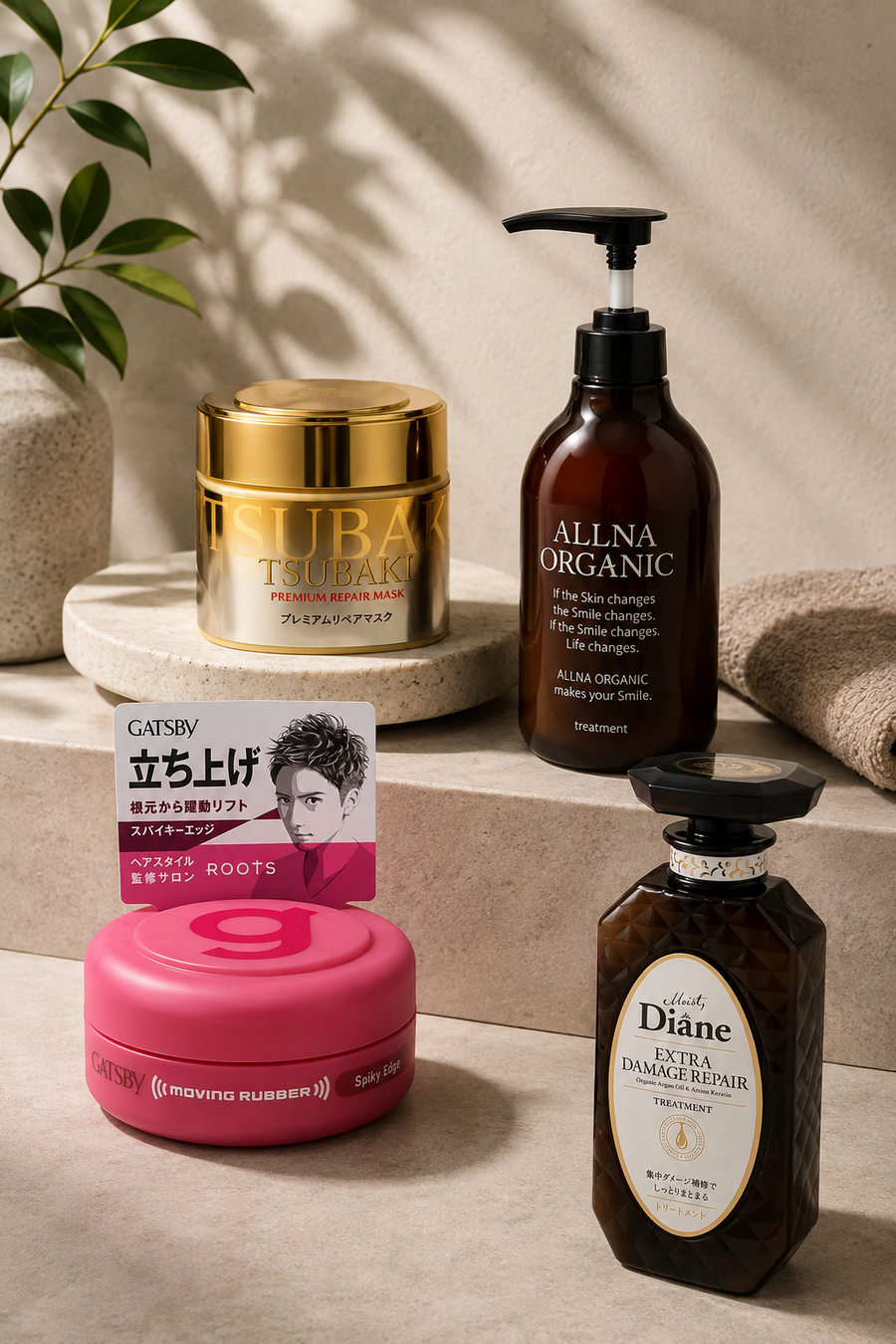
Tsubaki Premium Repair Mask Hair Pack
A Japanese repair-focused treatment featuring camellia-related conditioning in the listed formula. Apply and rinse according to the current product directions.
A repair-focused Japanese treatment for stressed or damaged-feeling hair.

Ichikami Premium Hair Treatment Mask
A nourishing conditioning step designed to leave hair feeling smoother and easier to manage. Check the current product page for exact use instructions.
A nourishing conditioning option for smoother, more manageable-feeling hair.
Compare Hair Masks for Your Hair Type
Japan Standards’ Haircare, hair-mask collection provides a selection of treatments that can be compared according to hair type and desired result.
Explore Hair Mask CollectionBuild a Simple Japanese-Inspired Hair-Care Routine
A polished routine does not need to be complicated:
Cleanse → Condition → Mask when needed → Dry gently → Finish and protect
Start by cleansing the scalp without unnecessarily roughening the lengths. Follow with conditioner as needed, then introduce a hair mask when your hair needs additional conditioning.
After washing, avoid aggressive towel rubbing. Instead, gently remove excess water and handle wet hair carefully, since wet hair can be more vulnerable to mechanical stress.
Consistency matters more than constantly adding products. Choose treatments based on what your hair actually feels like, keep heat and mechanical stress under control, and give each product enough time to show whether it works for you.
Common Hair Mask Mistakes to Avoid
Using Too Much Product
More product does not automatically mean better results. Start with enough to coat the lengths evenly and increase only if needed.
Applying Rich Masks Directly to the Scalp
Many rinse-out masks are intended for the lengths rather than the roots. Applying a rich formula close to the scalp can make some hair types feel heavy or greasy.
Leaving the Mask on for Too Long
Longer is not always better. Follow the product's recommended processing time.
Using a Heavy Mask on Fine Hair
Fine hair may need a lighter formula or smaller amount. If the hair loses volume after treatment, reduce the quantity or frequency.
Expecting a Mask to Repair Everything
A hair mask can improve the cosmetic feel and appearance of hair, but it cannot permanently reverse every form of damage.
Shop Japanese Haircare
Japanese Hair Masks
Compare treatments according to hair type, level of processing, and desired result.
Shop Now →Japanese Conditioners
Explore regular conditioning options for softness, slip and manageability.
Shop Now →Japanese Hair Oils
Find finishing options for dry ends, shine, softness and smoother-looking lengths.
Shop Now →Related Hair Mask Guides
Hair Mask for Damaged Hair
Learn how to choose a hair mask when your hair feels dry, rough, processed, or damaged from heat and colouring.
Read More →Tsubaki Hair Mask Guide
Explore the Tsubaki hair mask and learn where this Japanese repair-focused treatment can fit into your routine.
Read More →Best Hair Mask for Dry Hair
Compare hair-mask options and care tips for dry hair that needs more softness, moisture support, and manageability.
Read More →Frequently Asked Questions
Can I Use a Hair Mask Every Day?
Some formulas allow frequent use, but many masks are designed for less frequent intensive conditioning. Follow the individual product directions and adjust according to how your hair responds.
Do I Use a Hair Mask on Wet or Dry Hair?
Most rinse-out masks are applied to clean, damp, towel-dried hair. Always check the specific product directions.
Is a Hair Mask Better Than a Conditioner?
They serve different roles. Conditioner is generally the everyday conditioning step, while a mask is a more intensive treatment for times when your hair needs additional care.
Should I Put a Hair Mask on My Roots?
Usually, rinse-out masks are best concentrated on the mid-lengths and ends unless the product specifically instructs scalp or root application.
Can a Hair Mask Fix Split Ends Permanently?
A mask can make split or rough ends look and feel smoother, but it cannot permanently fuse a split end back together. Trimming remains the definitive way to remove split ends.
Can I Use a Hair Mask on Coloured Hair?
Yes, provided the specific formula is appropriate for coloured hair. Look for products designed for treated or colour-treated hair and follow the manufacturer's directions.
Why Does My Hair Feel Heavy After a Hair Mask?
The formula may be too rich for your hair type, you may be using too much product, or the treatment may be used too frequently. Try reducing the amount or frequency.
Find the Right Japanese Hair Mask for Your Routine
Choose a treatment based on your hair texture, level of processing, and biggest concern. The goal is enough conditioning to improve softness and manageability without leaving the hair overloaded.
Explore Hair Masks