



Hair Mask for Damaged Hair: How to Choose the Right Repair Treatment
Dryness, split ends, rough texture, frequent heat styling, coloring, and bleaching can leave hair feeling weaker and harder to manage. Adding a hair mask for damaged hair to your routine can provide deeper conditioning than a standard conditioner, helping damaged lengths feel softer, smoother, more hydrated, and easier to style.
Japanese hair care is particularly popular for intensive treatments designed around moisture, smoothing, amino acids, oils, proteins, and other conditioning ingredients. Whether you are dealing with heat-damaged hair, bleached hair, color-treated hair, dry and brittle hair, or damaged ends, choosing a treatment that matches your specific concern is more useful than simply buying the richest formula available.
At Japan Standards, you can shop Japanese hair treatments for different levels of dryness and damage. Browse the complete Hair Mask Collection to compare Japanese masks and treatments in one place.
What Does a Hair Mask Do for Damaged Hair?
A damaged hair mask is an intensive conditioning treatment designed to improve the feel and appearance of stressed hair. Depending on the formula, it may support hair hydration, softness, shine, smoothness, frizz control, and manageability.
Hair Mask for Damaged Hair Guide
What Does a Hair Mask Do for Damaged Hair?
A damaged hair mask is an intensive conditioning treatment designed to improve the feel and appearance of stressed hair.
Unlike ordinary daily conditioning, a deep conditioning hair mask generally provides more concentrated conditioning ingredients. Depending on the formula, it may help with hair hydration, softness, shine, smoothness, frizz control, and manageability.
Common Signs of Damaged Hair
Hair damage can appear differently depending on your routine and hair type. Common concerns include dry or rough hair, hair breakage, split ends and damaged ends, frizziness and tangling, dull-looking hair, weak or fragile hair, loss of softness, and difficulty combing or styling.
Damage may become more noticeable after repeated blow drying, straightening, curling, chemical processing, bleaching, or coloring. For a broader explanation of selecting treatments based on the cause of damage, read our guide to hair masks for hair damage.
Can a Hair Mask Actually Repair Damaged Hair?
A repairing hair mask can condition damaged areas and temporarily improve softness, smoothness, strength, and manageability. However, hair that has physically split cannot literally be fused back together permanently by a cosmetic treatment.
Instead, a hair repair mask works mainly by conditioning and coating the hair shaft, reducing roughness and improving the way damaged hair looks and feels.
What About Split Ends?
A hair mask for split ends can make dry ends feel smoother and less rough, but trimming remains the most reliable way to remove established split ends.
What About Breakage?
A hair mask for breakage can improve conditioning and reduce some of the friction associated with dry, tangled hair.
Why Consistent Care Matters
Hair repair works best as a routine rather than a one-time treatment. Gentle washing, regular conditioning, lower heat exposure, careful detangling, and an intensive hair treatment can all contribute to better-looking, more manageable hair over time.
How to Choose the Best Hair Mask for Damaged Hair
The best hair mask for damaged hair depends on what caused the damage and how your hair currently feels. Instead of looking for one universal treatment, identify whether your main concern is moisture loss, breakage, roughness, bleaching, heat damage, chemical processing, or frizz.
For Dry and Brittle Hair
Dry damaged hair typically needs moisture and conditioning. Look for a moisturizing, hydrating, or nourishing hair mask with ingredients such as hyaluronic acid, natural oils, conditioning agents, amino acids, and proteins.
For Heat-Damaged Hair
Frequent straightening, curling irons, and blow drying can leave hair dry and rough. A Japanese hair mask for heat-damaged hair can provide intensive conditioning after repeated styling. Use lower temperatures where possible and limit unnecessary heat.
For Bleached Hair
Bleached hair often needs extra conditioning. A Japanese hair mask for bleached hair may help improve softness and manageability while reducing a rough feel. See our hair mask for bleached hair guide.
For Color-Treated or Frizzy Hair
Color-treated hair can benefit from additional conditioning after repeated coloring. For frizz, a smoothing treatment can help improve softness, shine, and manageability as part of an anti-frizz hair-care routine.
Japanese Hair Masks for Damaged Hair at Japan Standards
Japanese beauty takes several approaches to damaged hair care, including amino-acid treatments, protein-containing formulas, natural oils, moisturizing ingredients, and intensive rinse-out treatments. Here are four options available from Japan Standards.

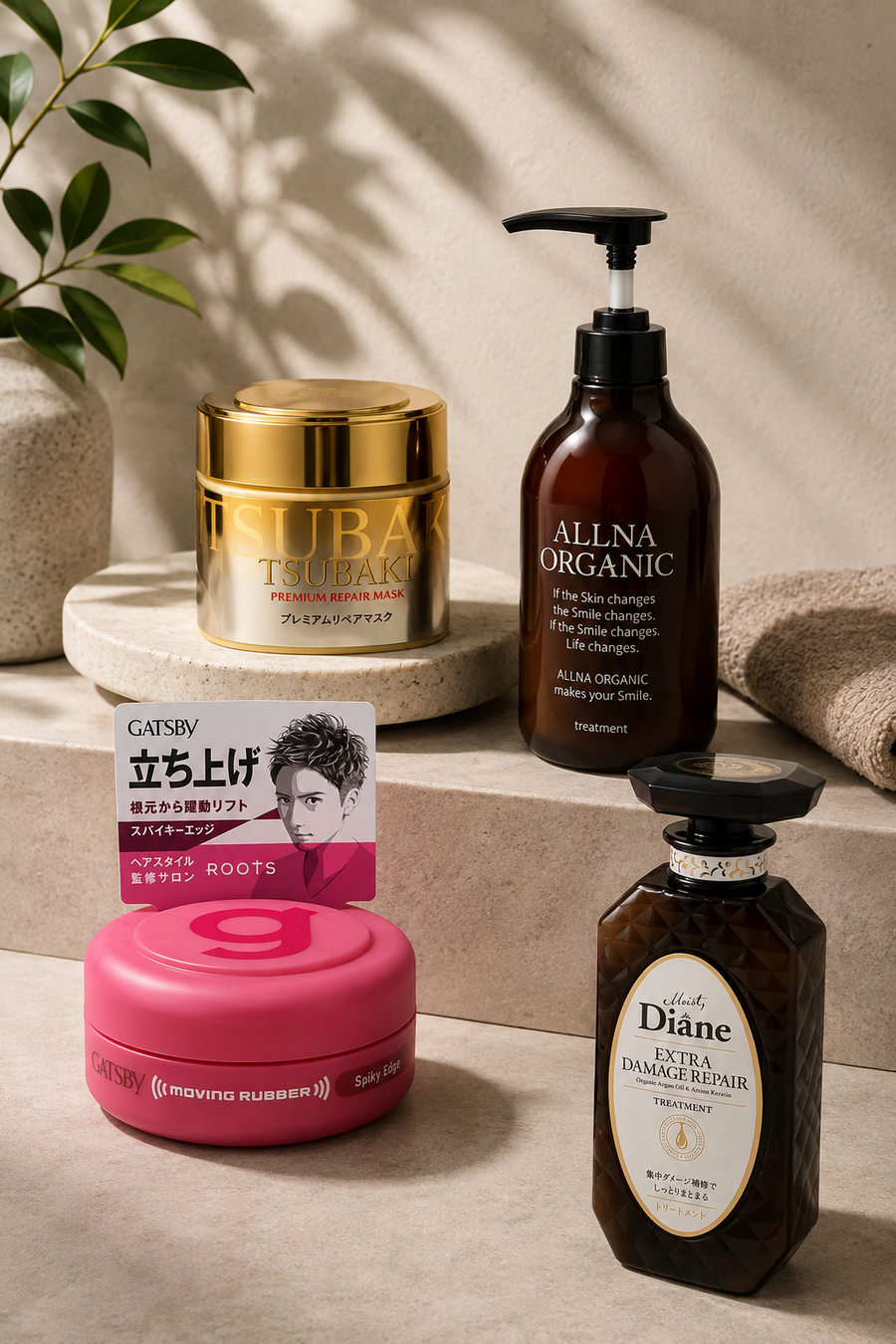
Diane Extra Damage Repair Hair Mask
The Diane Extra Damage Repair Hair Mask is a repair-focused option for people whose hair has been stressed by coloring, bleaching, perms, dryness, or other forms of processing.
Its formula includes hydrolyzed keratin alongside ceramides, argan oil, hyaluronic-acid ingredients, collagen, and additional conditioning components. It is positioned for softness, smoothness, shine, manageability, and intensive damaged-hair care.
Consider it for dry damaged hair, bleached or chemically treated hair, breakage and roughness, intensive conditioning, or protein-focused damaged hair care.

Salon Link Amino Treatment Repair & Protect
The Salon Link Amino Treatment Repair & Protect from Kumano Cosme focuses on amino-acid-based conditioning.
The formula contains a blend of 16 amino acids along with hydrolyzed silk and sodium hyaluronate. It is designed to moisturize while helping hair feel softer, smoother, and more manageable.
A useful option for dry and rough hair, additional hydration, weak or difficult-to-manage lengths, amino-acid-focused care, and regular intensive conditioning.

Salon Link Amino Camellia Damage Repair Treatment
The Salon Link Amino Camellia Damage Repair Treatment combines amino-acid conditioning with ingredients associated strongly with J-beauty hair care.
Its listed formula includes camellia seed oil, camellia extract, ceramide, sodium hyaluronate, hydrolyzed silk, and amino acids. It is positioned as an intensive treatment for concerns including dryness, breakage, and split ends.
Consider it for dry and brittle hair, frizzy damaged hair, damaged ends, hydration and smoothing, or a routine centered on camellia oil and amino-acid conditioning.

Tsubaki Premium Repair Mask
The Tsubaki Premium Repair Mask is one of the most recognizable Japanese hair-mask options in the Japan Standards range.
Its listed formula includes camellia seed oil, glycerin, sodium acetylhyaluronate, and other conditioning ingredients. The product is designed for dry, damaged, and color-treated hair with an emphasis on moisture, smoothness, softness, and shine.
A rinse-out intensive treatment to consider for dry or color-treated hair, smoother and shinier-looking hair, and camellia-based Japanese hair care.
For more Japanese treatment options beyond damage-focused products, explore our complete guide to choosing a Japanese hair mask.
Which Japanese Hair Mask for Damaged Hair Should You Choose?
Your ideal option depends primarily on your hair concern. For severely dry or processed hair, consider an intensive repairing or protein-focused treatment. If hydration is the priority, an amino-acid or moisture-rich formula may fit better. If you want a Japanese treatment built around camellia-inspired hair care, consider Salon Link Amino Camellia or Tsubaki.
Explore Hair Mask CollectionHow Often Should You Use a Hair Mask for Damaged Hair?
There is no universal frequency for every formula. A weekly hair mask is a practical starting point for many routines, but heavily processed hair may benefit from more frequent conditioning if the product instructions allow it. Fine hair or hair that becomes weighed down easily may need less frequent application.
Pay Attention to Your Hair
If your hair feels soft, smooth, and manageable, your current routine may be enough. If it feels excessively coated or heavy, reduce the amount or frequency.
Combine Treatment With Gentle Hair Care
For better damaged hair care, consider reducing unnecessary heat, detangling carefully, and choosing suitable shampoo and conditioner.
Focus on the Lengths
The mid-lengths and ends generally experience the greatest accumulated damage, so these areas usually deserve the most attention.
Follow the Product Instructions
Individual formulas differ. Always prioritize the directions on the product itself over a universal hair-care rule.
Hair Mask vs Conditioner and Hair Treatment
Hair Mask Before or After Conditioner?
A hair mask is generally used after shampooing. Whether you need conditioner as well depends on the specific treatment and your hair needs. A rich intensive conditioning treatment may provide enough conditioning on its own.
Hair Mask vs Conditioner
Conditioner is usually intended for routine conditioning after shampooing. A hair mask is typically more intensive and may be used periodically when hair requires extra nourishment.
Hair Mask vs Hair Treatment
The terms overlap significantly in Japanese hair care. A product called a “treatment” can perform a similar function to a mask by providing concentrated conditioning to dry or damaged hair. Rather than relying only on the product name, consider its directions, ingredients, texture, and intended use.
Quick Product Comparison
| Product | Treatment Style | Main Focus | Consider It For |
|---|---|---|---|
| Diane Extra Damage Repair Hair Mask | Repair-Focused Hair Mask | Protein + Intensive Conditioning | Bleached, processed, dry & heavily damaged hair |
| Salon Link Amino Treatment Repair & Protect | Amino-Acid Hair Treatment | Hydration & Manageability | Dry, rough, difficult-to-manage hair |
| Salon Link Amino Camellia Damage Repair Treatment | Camellia + Amino Acid Treatment | Hydration & Smoothing | Dryness, roughness, frizz & damaged ends |
| Tsubaki Premium Repair Mask | Rinse-Out Repair Mask | Moisture, Softness & Shine | Dry, damaged or color-treated hair |
Which Japanese Hair Mask for Damaged Hair Should You Choose?
Your ideal option depends primarily on your hair concern.
For Severely Dry or Processed Hair
Consider an intensive repairing or protein-focused treatment when your main concerns are processing, roughness, brittleness, or severe dryness.
When Hydration Is the Priority
An amino-acid or moisture-rich formula may fit better when your hair mainly feels dehydrated, rough, or difficult to manage.
For Camellia-Inspired Japanese Hair Care
If you want a treatment built around camellia-inspired hair care, Salon Link Amino Camellia or Tsubaki may be relevant options to compare.
How to Use a Hair Mask for Damaged Hair
For most rinse-out treatments, begin by shampooing your hair. Remove excess water so the product is not immediately diluted, then distribute the treatment through the lengths and particularly damaged ends. Follow the application time stated on the individual product packaging before rinsing thoroughly.
Shampoo First
Cleanse the hair first so the treatment can be applied to freshly washed lengths.
Remove Excess Water
Gently remove excess water so the hair mask is not immediately diluted.
Apply to Lengths and Damaged Ends
Distribute the treatment through the mid-lengths and ends, concentrating on areas that feel particularly dry or damaged.
Leave On as Directed and Rinse
Follow the application time stated on the individual product packaging, then rinse thoroughly.
Shop Hair Masks for Damaged Hair at Japan Standards
Choosing the right hair mask for damaged hair comes down to identifying what your hair actually needs.
Dry, overprocessed, bleached, and heat-damaged hair may need a combination of moisture, conditioning, smoothing, and protein-focused care. Ingredients such as amino acids, keratin, silk protein, ceramides, hyaluronic acid, argan oil, and camellia oil can appear in different Japanese formulations, but the complete formula matters more than any single ingredient.
Explore Japan Standards
At Japan Standards, you can explore Japanese beauty and J-beauty hair-care products sourced from Japan, including repair treatments for dry, rough, color-treated, and damaged hair.
Browse the Japanese Hair Mask Collection
Browse the complete Japanese Hair Mask Collection to compare available treatments and select the option that best matches your routine.
Read More About Japanese Hair Masks
Japanese Hair Mask Guide
Explore Japanese hair-mask options beyond damage-focused treatments and learn how to choose according to your hair needs.
Read Guide →Hair Mask for Hair Damage
Learn how to select a hair treatment according to the cause and type of hair damage.
Read Guide →Hair Mask for Bleached Hair
See what to consider when bleaching has left your hair dry, rough, or in need of additional conditioning.
Read Guide →Frequently Asked Questions About Hair Masks for Damaged Hair
What is the best hair mask for damaged hair?
The best option depends on the type of damage. Bleached or heavily processed hair may benefit from intensive protein and conditioning formulas, while dry or frizzy damaged hair may benefit more from moisture-rich treatments containing conditioning agents, oils, amino acids, or hyaluronic-acid ingredients.
Does a hair mask help hair breakage?
A conditioning mask can make dry hair softer and easier to detangle, potentially reducing friction during handling. It cannot permanently reverse hair that has already physically broken.
Does a hair mask help split ends?
Hair masks can temporarily smooth and condition split or rough ends, but they cannot permanently reconnect an already split strand. Regular trimming is necessary to physically remove split ends.
Can I use a hair mask after bleaching?
Yes. A hair mask after bleaching can provide additional conditioning and help bleached hair feel softer and more manageable. See our complete hair mask for bleached hair guide for more information.
Can I use a hair mask after coloring?
Yes. A suitable hair mask after coloring can help address dryness and roughness associated with color processing. Choose a formula compatible with color-treated hair.
Where can I buy Japanese hair masks for damaged hair?
You can shop Japanese masks and intensive hair treatments through the Japan Standards Hair Mask Collection, including options from Tsubaki, Diane, and Kumano Cosme.
Find the Right Hair Mask for Damaged Hair
Compare Japanese repair treatments for dryness, bleaching, heat styling, coloring, frizz, breakage, and damaged ends, then choose the formula that best fits your hair-care routine.
Explore Hair Masks