





Good Hair Masks for Dry, Damaged Hair: Japanese Treatments to Consider
Dryness and damage often appear together. Hair that has been repeatedly colored, bleached, straightened, curled, blow-dried, or chemically treated can begin to feel rough, tangled, brittle, frizzy, or difficult to manage. In that situation, adding a good hair mask for dry damaged hair can provide more intensive conditioning than a regular conditioner alone.
Dryness and damage often appear together. Hair that has been repeatedly colored, bleached, straightened, curled, blow-dried, or chemically treated can begin to feel rough, tangled, brittle, frizzy, or difficult to manage. In that situation, adding a good hair mask for dry damaged hair can provide more intensive conditioning than a regular conditioner alone.
Japanese hair care offers several approaches to dry damaged hair, including moisture-rich masks, keratin treatments, amino acid formulas, camellia oil treatments, and smoothing conditioners. The right option depends on whether your biggest concern is dehydration, rough texture, breakage, heat damage, chemical processing, or lack of softness and shine.
At Japan Standards, you can shop Japanese hair treatments designed for different types of dryness and damage. Browse the complete Hair Mask Collection to compare more treatments, or continue below for four options worth considering.
What Makes a Good Hair Mask for Dry Damaged Hair?
A hair mask for dry damaged hair should do more than simply make the hair smell pleasant. A useful formula should provide enough conditioning to make dry lengths feel softer, smoother, less tangled, and easier to manage.
Good Hair Masks for Dry, Damaged Hair
What Makes a Good Hair Mask for Dry Damaged Hair?
A hair mask for dry damaged hair should do more than simply make the hair smell pleasant. A useful formula should provide enough conditioning to make dry lengths feel softer, smoother, less tangled, and easier to manage.
Depending on the product, this may come from ingredients such as natural oils, amino acids, hydrolyzed proteins, keratin, ceramides, hyaluronic acid, glycerin, silicones, fatty alcohols, and other conditioning agents.
The best formula for you depends on why your hair is dry and damaged.
Dryness vs Damage
Dry hair mainly needs conditioning and moisture support. Damaged hair, particularly hair affected by bleaching, coloring, heat styling, or chemical treatments, may also benefit from formulas designed around proteins, amino acids, ceramides, oils, and intensive conditioning agents.
That is why the best hair mask for dry damaged hair is not necessarily the richest or most expensive treatment. It should match your individual hair condition.
Common Signs of Dry Damaged Hair
Dry damaged hair can feel rough, coarse, brittle, tangled, dull, or unusually frizzy. You may also notice damaged ends, split ends, breakage, reduced shine, or difficulty detangling.
Heat-Damaged Hair
Frequent straightening, curling, and blow drying can contribute to moisture loss and a rougher hair texture.
Bleached and Color-Treated Hair
Bleaching and repeated coloring can leave hair feeling more porous and fragile, making intensive hair conditioning particularly useful.
Overprocessed Hair
Hair exposed to repeated chemical services may need a gentler routine overall, not simply a stronger treatment.
If dryness is your main issue, see our guide to the Best Hair Mask for Dry Hair. For damage-focused care, read our Hair Mask for Damaged Hair guide.
Good Japanese Hair Masks for Dry Damaged Hair
The four products below take slightly different approaches to damaged hair repair and intensive conditioning.
| Product | Main Focus | Consider It For |
|---|---|---|
| Diane Extra Damage Repair Hair Mask | Keratin, ceramides, oils and intensive repair-focused care | Bleached, chemically treated, overprocessed or brittle-feeling hair |
| Essential Soft and Moisturizing Treatment | Moisture, softness and smoothing | Dry, rough or damaged hair needing straightforward conditioning |
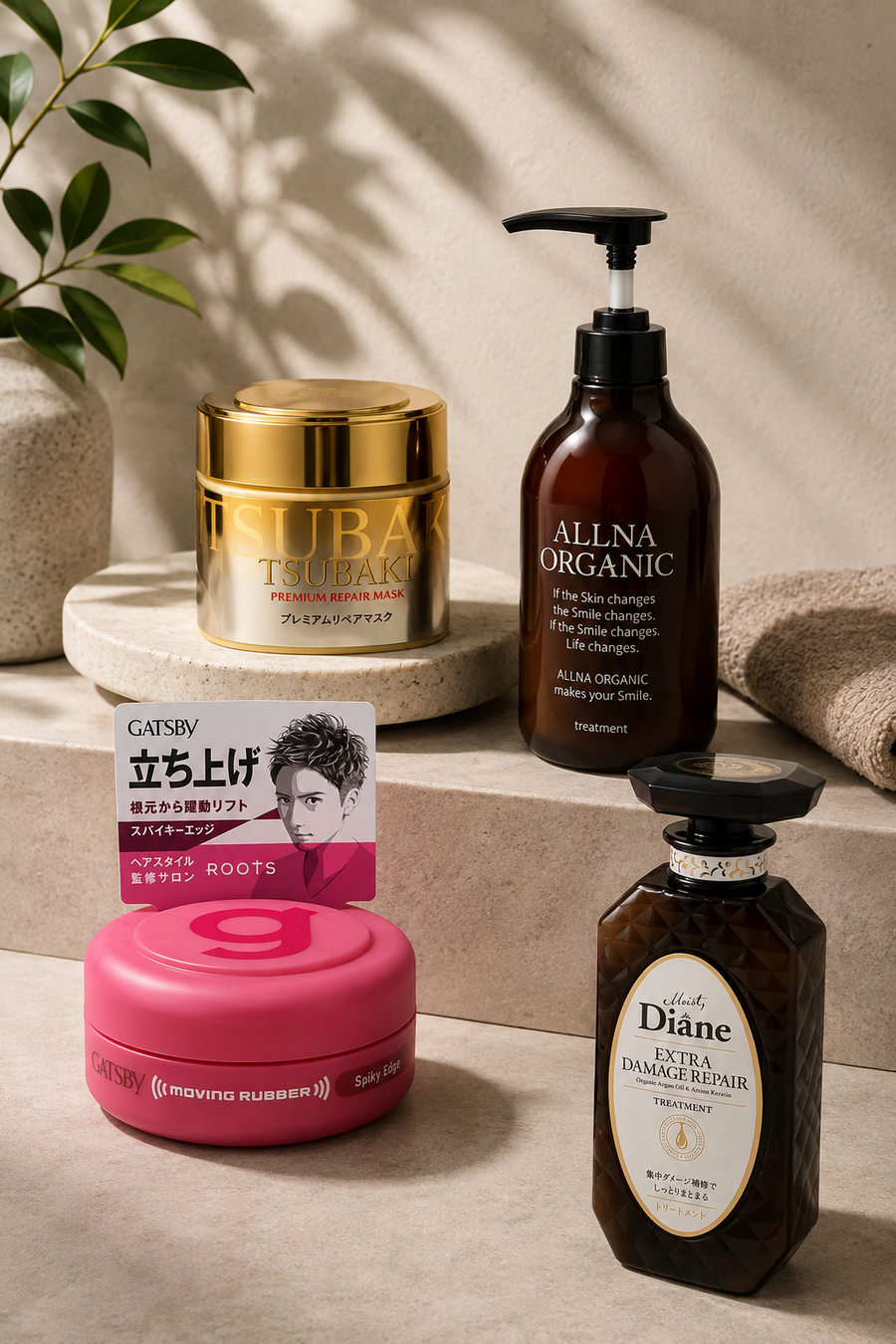
| Tsubaki Premium Repair Mask | Camellia-based conditioning, smoothness and shine | Dry, damaged or color-treated hair |
| Salon Link Amino Treatment Repair & Protect | Amino acids, silk protein and hydration | Dry, weak or difficult-to-manage hair |
1. Diane Extra Damage Repair Hair Mask
The Diane Extra Damage Repair Hair Mask is the most repair-focused option in this selection for shoppers interested in protein-rich damaged hair care.

Diane Extra Damage Repair Hair Mask
The Diane Extra Damage Repair Hair Mask is the most repair-focused option in this selection for shoppers interested in protein-rich damaged hair care.
Keratin, ceramides, oils, and repair-focused conditioning for bleached, chemically treated, overprocessed, or brittle-feeling hair.
Its current ingredient list includes multiple forms of keratin, hydrolyzed keratin, several ceramides, argan oil, mango seed oil, sodium hyaluronate, hydrolyzed rice protein, collagen, glycerin, amino-acid-related ingredients, and several additional oils and conditioning components.
Why Consider Diane?
This formula is especially relevant if your dry damaged hair is associated with bleaching, coloring, perms, or significant processing.
Japan Standards currently describes it as a deeply nourishing mask formulated for damage associated with coloring, bleaching, and perms, with an emphasis on reducing roughness and improving softness, shine, and manageability.
A Protein-Rich Hair Mask
Because the formula contains multiple keratin ingredients and hydrolyzed rice protein, Diane is particularly relevant for shoppers specifically seeking a keratin hair treatment or protein-focused option.
Ceramides and Natural Oils
The ingredient list also includes several ceramides and oils, including argan oil, giving the formula both conditioning and protein-focused characteristics.
How to Use It
The current directions state to apply the treatment to washed, towel-dried hair, leave it on for a few minutes, and rinse thoroughly.
2. Essential Soft and Moisturizing Treatment
The Essential Soft and Moisturizing Treatment by Kao is a more straightforward choice for people whose hair mainly feels dry, rough, or difficult to manage.

Essential Soft and Moisturizing Treatment by Kao
The Essential Soft and Moisturizing Treatment by Kao is a more straightforward choice for people whose hair mainly feels dry, rough, or difficult to manage.
A straightforward moisturizing and smoothing option for dry, rough, or damaged hair needing regular conditioning.
Its listed ingredients include sunflower seed oil, lactic acid, lanolin fatty acid, malic acid, polyglycerin-3, amodimethicone, stearyl alcohol, DPG, and dimethicone.
Why Consider Essential?
If you want a moisturizing hair mask for damaged hair but do not specifically need a keratin-heavy formula, Essential provides a conditioning-focused option.
Japan Standards positions it around improving softness, shine, texture, and manageability.
For Dry and Rough Hair
A combination of oils, silicones, fatty alcohols, and other conditioning ingredients can help improve slip and smoothness. This can be useful when damaged ends feel tangled, frizzy, or difficult to comb.
For Heat-Styled Hair
If your dryness comes mainly from regular blow drying or straightening, a moisture-focused treatment may fit well alongside lower heat settings and sensible heat protection.
How Often Can You Use It?
The current Japan Standards directions recommend applying it to damaged hair and using the product once or twice a week.
Keep the Routine Simple
If your hair already feels soft after masking, you may not need to layer an equally heavy conditioner over it during the same wash.
3. Tsubaki Premium Repair Mask
The Shiseido Tsubaki Premium Repair Mask is a recognizable J-beauty option for dry, damaged, and color-treated hair.

Shiseido Tsubaki Premium Repair Mask
The Shiseido Tsubaki Premium Repair Mask is a recognizable J-beauty option for dry, damaged, and color-treated hair.
Camellia-based conditioning with an emphasis on softness, smoothness, shine, and manageability for dry, damaged, or color-treated hair.
Its listed formula includes glycerin, camellia seed oil, sodium acetylhyaluronate, royal jelly extract, hydrolyzed conchiolin, and several conditioning ingredients and silicones.
Why Consider Tsubaki?
This mask is particularly suitable for shoppers who want a Japanese hair mask for dry damaged hair with an emphasis on smoothness, softness, shine, and manageability.
Japan Standards currently positions the mask for dry, damaged, and color-treated hair.
Camellia Oil and Tsubaki Hair Care
Camellia seed oil is closely associated with Japanese beauty and traditional Japanese hair care. In modern conditioning formulas, oils work alongside other conditioning ingredients to improve lubrication and softness.
For Color-Treated Hair
If repeated coloring leaves your hair dry and rough, Tsubaki can provide an additional intensive conditioning step after shampooing.
Is Tsubaki a Keratin Treatment?
The current ingredient listing does not show keratin, so it should not be treated as equivalent to a dedicated keratin or protein-rich hair mask.
How to Use Tsubaki
The current directions are straightforward: apply after shampooing and rinse thoroughly.
4. Salon Link Amino Treatment Repair & Protect
The Salon Link Amino Treatment Repair & Protect by Kumano Cosme takes an amino-acid-focused approach.

Salon Link Amino Treatment Repair & Protect 300g
The Salon Link Amino Treatment Repair & Protect by Kumano Cosme takes an amino-acid-focused approach.
An amino-acid-focused treatment with hydrolyzed silk and hydration for dry, weak, rough, or difficult-to-manage hair.
Its current formula contains 16 listed amino acids alongside glycerin, sodium hyaluronate, hydrolyzed silk, silicones, and conditioning agents. Japan Standards describes it as a moisturizing treatment designed to leave hair softer, smoother, and more manageable.
Why Consider an Amino Acid Hair Treatment?
Amino acids and hydrolyzed proteins are commonly used in conditioning products designed for damaged or difficult-to-manage hair.
Salon Link can therefore appeal to people who want an amino acid hair treatment rather than a richer oil-focused or keratin-heavy mask.
For Dry and Brittle Hair
The combination of humectants, amino acids, hydrolyzed silk, and conditioning ingredients makes this a useful option for dry hair that also feels weak, rough, or difficult to detangle.
Hyaluronic Acid and Glycerin
The ingredient list includes sodium hyaluronate and glycerin, both of which fit naturally within a hydration-focused formulation.
Hydrolyzed Silk
Hydrolyzed silk is also listed, giving shoppers interested in silk protein another reason to consider the formula.
How to Use It
Japan Standards currently recommends washing the hair, towel drying to remove excess water, applying the treatment evenly, leaving it on for three to five minutes, and rinsing thoroughly.
Which Hair Mask Is Good for Dry Damaged Hair?
Your choice should depend on what your hair needs most.
For heavily processed or bleached hair where you specifically want keratin, proteins, ceramides, and oils, Diane offers the most protein-focused formulation of these four.
For straightforward moisture, softness, and smoothing, Essential is an easy option to incorporate into a weekly routine.
For dry or color-treated hair where smoothness, shine, and camellia-based Japanese hair care appeal to you, Tsubaki is worth considering.
For dry hair where amino acids, hydrolyzed silk, and hydration are priorities, Salon Link provides a different approach.
For additional comparisons, see our dedicated guide to the Best Hair Mask for Dry Damaged Hair.
Can a Hair Mask Repair Dry Damaged Hair?
A repairing hair mask can significantly improve the cosmetic condition of damaged hair, but “repair” needs to be understood realistically.
Conditioning ingredients can coat rough sections of the hair shaft, improve lubrication, reduce tangling, and make damaged lengths feel smoother and softer. Protein-containing products may also temporarily improve the feel of compromised hair.
However, a strand that is already physically split cannot be permanently fused back together by a cosmetic mask.
Does a Hair Mask Help Split Ends?
A hair mask for split ends can temporarily smooth rough ends and improve their appearance, but regular trimming is needed to physically remove established split ends.
Does a Hair Mask Help Breakage?
Better conditioning can reduce friction during brushing and detangling, which may help limit unnecessary mechanical stress.
How to Use a Hair Mask for Dry Damaged Hair
In most cases, start with shampoo and rinse thoroughly.
Remove excess water before applying your treatment so it is not immediately diluted. Concentrate the product primarily on the mid-lengths and damaged ends unless the manufacturer's directions say otherwise.
Hair Mask Before or After Conditioner?
A rinse-out hair mask is generally applied after shampooing.
Whether you need a separate conditioner afterward depends on the mask and your hair. Rich treatments may provide enough conditioning on their own.
Hair Mask vs Conditioner
Conditioner is normally intended for regular softness and detangling. A deep conditioning hair mask or intensive hair treatment is usually richer and designed for occasional extra care.
How Often Should You Use a Hair Mask?
A weekly hair mask is a reasonable starting point for many people with dry damaged hair.
Some formulas may be used more frequently, while fine hair may become weighed down with excessive application. Always follow the specific product directions.
Build a Better Dry Damaged Hair Routine
A good mask works best as part of a complete hair repair routine.
Use a suitable Japanese shampoo and conditioner, detangle gently, minimize unnecessary heat, avoid repeatedly styling the same section at high temperatures, and trim severely split ends when needed.
Ingredients such as keratin, amino acids, ceramides, hyaluronic acid, collagen, silk protein, rice protein, camellia oil, argan oil, jojoba oil, coconut oil, and other natural oils can all appear in damaged hair care. You do not need all of them in one treatment.
The complete formula and how your hair responds matter more than collecting individual “hero” ingredients.
Shop Japanese Hair Masks for Dry Damaged Hair at Japan Standards
If you are looking for where to buy hair masks for dry damaged hair, Japan Standards offers Japanese treatments across different conditioning approaches.
Choose Diane if you want protein-rich repair-focused care, Essential for moisture and softness, Tsubaki for camellia-inspired smoothing and shine, or Salon Link for amino acid and silk-based conditioning.
Browse the complete Japan Standards Hair Mask Collection to compare more Japanese masks and treatments.
You can also visit Japan Standards to explore more Japanese beauty, J-beauty hair care, shampoo, conditioner, hair treatments, and authentic Japanese products.
Diane Extra Damage Repair Hair Mask
Keratin, ceramides, oils, and repair-focused conditioning for bleached, chemically treated, overprocessed, or brittle-feeling hair.
Shop Now →Essential Soft and Moisturizing Treatment by Kao
A straightforward moisturizing and smoothing option for dry, rough, or damaged hair needing regular conditioning.
Shop Now →Shiseido Tsubaki Premium Repair Mask
Camellia-based conditioning with an emphasis on softness, smoothness, shine, and manageability for dry, damaged, or color-treated hair.
Shop Now →Salon Link Amino Treatment Repair & Protect 300g
An amino-acid-focused treatment with hydrolyzed silk and hydration for dry, weak, rough, or difficult-to-manage hair.
Shop Now →Frequently Asked Questions
What is a good hair mask for dry damaged hair?
A good option should match the cause of your damage. Look for moisturizing and conditioning formulas for general dryness, while heavily processed hair may benefit from treatments containing proteins, keratin, amino acids, ceramides, or richer oils.
Which Japanese hair mask is good for bleached hair?
Bleached hair often needs both conditioning and careful handling. A repair-focused formula such as Diane may appeal to shoppers seeking keratin and ceramides, while other moisturizing treatments may be appropriate depending on how the hair feels.
Can I use a hair mask after coloring?
Yes. A hair mask after coloring can provide additional conditioning when color-treated hair feels dry, rough, or difficult to manage.
Can I use a hair mask after heat styling?
Yes. Intensive conditioning can complement a routine for heat-damaged hair, but reducing excessive heat is also important to avoid adding more damage.
Is a moisturizing or protein hair mask better?
Neither is automatically better. Very dry hair may respond well to moisture-focused conditioning, while heavily processed hair may benefit from protein-containing treatments. Your individual hair response should guide frequency and product choice.
Where can I buy Japanese hair masks for dry damaged hair?
Shop the Japan Standards Hair Mask Collection to compare Japanese treatments for dryness, damage, frizz, coloring, bleaching, and heat-styled hair.
Final Thoughts
Finding a good hair mask for dry damaged hair starts with identifying whether your priority is moisture, protein-focused conditioning, smoothing, or a combination of these needs.
Diane Extra Damage Repair offers keratin, ceramides, oils, and other repair-focused ingredients. Essential Soft and Moisturizing Treatment provides straightforward conditioning for dry and rough hair. Tsubaki Premium Repair Mask emphasizes camellia-based Japanese hair care, softness, and shine, while Salon Link Amino Treatment combines 16 amino acids with hydrolyzed silk and hydrating ingredients.
Whichever treatment fits your needs, consistent hair conditioning, gentler detangling, lower unnecessary heat exposure, and an appropriate shampoo-and-conditioner routine can help dry damaged hair feel softer, smoother, shinier, and more manageable.
Explore the full Japanese Hair Mask Collection at Japan Standards to find the treatment that fits your routine.
Find the Right Hair Mask for Dry, Damaged Hair
Compare Japanese treatments for moisture, protein-focused conditioning, camellia-based smoothing, amino acids, silk, and hydration.
Explore Hair Mask Collection