







Deep Conditioning Hair Masks for Bleached Hair
Bleaching can give you the color you want, but repeated lightening can also leave hair feeling dry, porous, tangled, brittle, frizzy, or harder to manage. When everyday conditioner is no longer enough, adding a deep conditioning hair mask for bleached hair can provide a richer conditioning step focused on softness, hydration, smoothing, and easier detangling.
Why Does Bleached Hair Need Deep Conditioning?
Bleaching is a chemical process, and repeated lightening can leave the hair fiber feeling rougher and more porous. A deep conditioning mask cannot return processed hair to an untouched state, but it can improve softness, lubrication, moisture, smoothing, and manageability.
Deep Conditioning for Bleached Hair
Why Does Bleached Hair Need Deep Conditioning?
Bleaching is a chemical process, and repeated lightening can leave the hair fiber feeling rougher and more porous. The effects are often most noticeable through the mid-lengths and ends, especially if the hair is also colored, straightened, curled, or regularly blow-dried.
A deep conditioning mask for bleached hair does not literally return chemically processed hair to an untouched state. Instead, it can improve how the hair feels and behaves by providing lubrication, moisture, conditioning, and temporary smoothing.
Common Signs Your Bleached Hair Needs More Conditioning
Dry bleached hair may feel coarse after washing, tangle easily, develop frizz, look dull, or become harder to comb without pulling.
Brittle bleached hair may also be more vulnerable to mechanical breakage, particularly when brushing wet hair or using hot styling tools.
Bleached Hair Can Need Both Moisture and Strengthening Care
There is no single formula that works for every person. Some people primarily need a moisturizing hair mask. Others prefer a protein hair mask or keratin hair treatment after intensive bleaching.
Dryness After Bleaching
Hair that feels dehydrated may benefit from humectants, emollients, natural oils, fatty alcohols, silicones, and other hair-conditioning ingredients.
Weak or Overprocessed Hair
If your hair has been repeatedly lightened, highlighted, permed, or chemically treated, a strengthening hair treatment containing keratin, amino acids, or hydrolyzed protein may be worth considering.
Porous Hair
High-porosity hair can sometimes feel dry soon after washing. Deep conditioning may help improve softness, slip, and manageability even though it cannot permanently reverse structural damage.
For a broader overview, see our complete Hair Mask for Bleached Hair guide.
What to Look for in a Deep Conditioning Hair Mask for Bleached Hair
A good treatment should match the condition of your hair rather than simply contain the largest possible ingredient list.
Keratin and Hydrolyzed Protein
Keratin, hydrolyzed keratin, rice protein, silk protein, and other hydrolyzed proteins are commonly found in repair-oriented hair products and may be relevant when bleach-damaged hair feels weak, rough, or overprocessed.
Amino Acids
Amino acids are another common feature of Japanese hair treatments and can suit shoppers who want conditioning alongside ingredients associated with protein building blocks.
Humectants
Glycerin, sodium hyaluronate, and related hyaluronic-acid ingredients often appear in moisture-focused hair products.
Natural Oils
Argan oil, camellia oil, tsubaki oil, jojoba oil, coconut oil, rice bran oil, and other natural oils can provide emollient conditioning.
Ceramides
Some deep conditioning formulas include ceramides as part of a larger conditioning system.
Silicones and Conditioning Agents
Ingredients such as dimethicone, amodimethicone, fatty alcohols, and cationic conditioning agents can improve slip and help rough hair feel smoother.
Why the Complete Formula Matters
A product does not need keratin, collagen, ceramides, hyaluronic acid, camellia oil, and several proteins simultaneously to be useful. Choose according to your hair texture, processing history, and how your hair responds.
Japanese Deep Conditioning Treatments for Bleached Hair
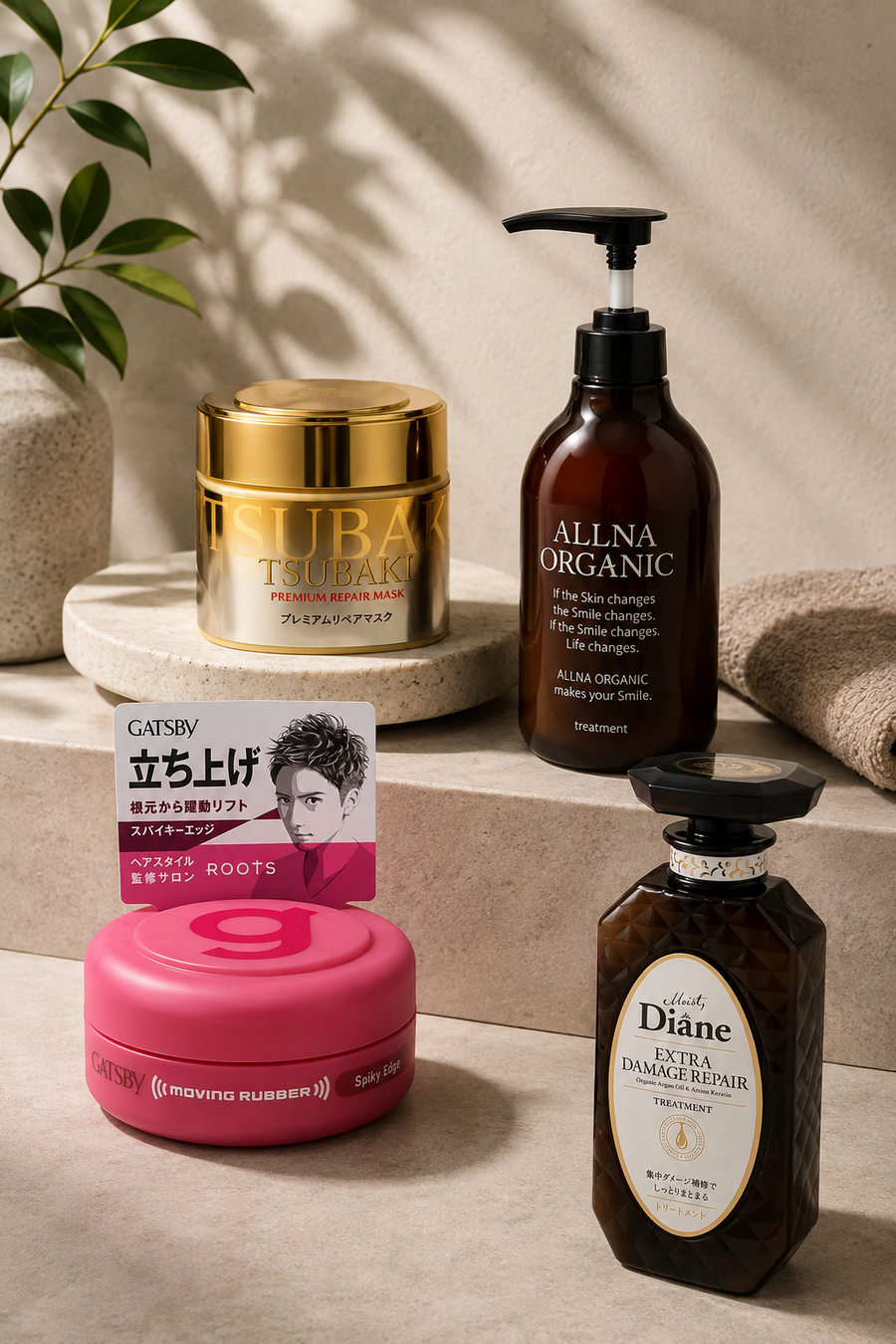
The three products below take noticeably different approaches: Diane focuses on keratin, proteins, ceramides and oils; Tsubaki emphasizes moisture and smoothing; Salon Link combines 16 amino acids, silk and hydration.

Diane Extra Damage Repair Hair Mask
The Diane Extra Damage Repair Hair Mask is the most protein- and keratin-focused option of these three.
Its current Japan Standards ingredient list includes several ceramides, hydrolyzed keratin, other keratin ingredients, hydrolyzed rice protein, collagen, sodium hyaluronate, panthenol, argan oil, mango seed oil, glycerin, and numerous conditioning ingredients.
A repair-focused option for heavily processed, brittle, rough, or frequently bleached hair.

Shiseido Tsubaki Premium Repair Mask
The Tsubaki Premium Repair Mask takes a more moisture- and smoothing-focused approach.
The current Japan Standards formula lists glycerin, camellia seed oil, sodium acetylhyaluronate, royal jelly extract, hydrolyzed conchiolin, dimethicone, amodimethicone, fatty alcohols, and conditioning agents.
A moisture- and smoothing-focused option for dry, rough, frizzy, dull, or color-treated bleached hair.

Salon Link Amino Treatment Repair & Protect
The Salon Link Amino Treatment Repair & Protect from Kumano Cosme offers an amino-acid-focused alternative.
The current formula contains 16 listed amino acids together with hydrolyzed silk, sodium hyaluronate, glycerin, silicones, fatty alcohols, and conditioning agents.
A balanced option for dry, weak, or difficult-to-manage processed hair when you want amino acids, silk, hydration, and smoothing.
1. Diane Extra Damage Repair Hair Mask
If repeated bleaching has left your hair feeling weak, brittle, rough, or heavily processed, Diane offers a more repair-focused formula than a simple moisturizing treatment.
Keratin and Hydrolyzed Protein
Multiple keratin-related ingredients are listed in the formula, alongside hydrolyzed rice protein. This makes Diane especially relevant for shoppers searching for a protein-rich hair mask for bleached hair.
Ceramides
The current formula also lists Ceramide EOP, NG, NP, AG, and AP.
Moisturizing Ingredients and Oils
Argan oil, mango seed oil, sodium hyaluronate, glycerin, panthenol, and several additional plant-derived oils or butters are also present.
How to Use Diane
Japan Standards currently instructs users to apply the mask to washed, towel-dried hair, leave it for a few minutes, and rinse thoroughly.
2. Shiseido Tsubaki Premium Repair Mask
Bleaching does not always leave hair craving a strongly protein-focused formula. Sometimes the main concerns are dryness, frizz, dullness, and a lack of smoothness. Tsubaki may fit that situation particularly well.
Camellia Oil and Japanese Hair Care
Camellia seed oil—or tsubaki oil—is listed in the current formula. It works alongside glycerin, sodium acetylhyaluronate, silicones, and conditioning agents rather than functioning as a stand-alone treatment ingredient.
Is Tsubaki a Keratin Hair Mask?
The current product ingredient list does not list keratin. If you specifically want a keratin hair treatment after intensive bleaching, Diane may be more aligned with that goal.
When Tsubaki May Be a Good Match
Consider Tsubaki when your bleached hair feels dry, rough, frizzy, dull, difficult to detangle, or in need of additional softness and shine.
How to Use Tsubaki
The current Japan Standards directions are simple: apply it after shampooing and rinse thoroughly.
3. Salon Link Amino Treatment Repair & Protect
Salon Link sits between a strongly keratin-focused treatment and a straightforward moisturizing mask. Its formula may appeal if you want amino acids, silk protein, and hydration in the same rinse-out treatment.
Amino Acids
The ingredient list contains lysine, alanine, histidine, arginine, serine, proline, glutamic acid, threonine, valine, leucine, glycine, isoleucine, phenylalanine, cystine, methionine, and tryptophan.
Hydrolyzed Silk
Hydrolyzed silk is also listed, giving the product another protein-related conditioning component.
Sodium Hyaluronate and Glycerin
Sodium hyaluronate and glycerin support the product's moisture-focused profile.
How to Use Salon Link
Japan Standards currently recommends washing the hair, towel drying to remove excess water, applying the treatment evenly, leaving it on for three to five minutes, and rinsing thoroughly.
Which Deep Conditioning Mask Is Best for Bleached Hair?
The right choice depends on how your bleached hair feels. Consider Diane if you want keratin, hydrolyzed proteins, ceramides, oils, and intensive conditioning. Consider Tsubaki if moisture, softness, shine, and smoothing are your main goals. Consider Salon Link if you prefer amino acids, hydrolyzed silk, sodium hyaluronate, and conditioning ingredients.
If dryness is the dominant concern rather than bleach processing specifically, see our Deep Conditioning Masks for Dry Hair guide.
Explore Hair Mask CollectionProtein Mask vs Moisturizing Mask for Bleached Hair
One of the biggest buying decisions is whether to prioritize protein or moisture.
Protein-Focused Conditioning
A protein hair mask may appeal when hair has undergone substantial chemical processing and feels weak, brittle, or overly fragile. Diane is the clearest protein-focused option here.
Moisture-Focused Conditioning
If bleached hair mainly feels coarse, frizzy, dull, and dry, a moisture-rich smoothing mask may be more appropriate. Tsubaki leans more strongly in this direction.
Balanced Conditioning
Salon Link combines amino acids and hydrolyzed silk with humectants and smoothing conditioners for a more balanced approach.
Match Your Hair, Not a Trend
Your hair may need protein, moisture, or both. Choose according to processing history, texture, and how your hair responds rather than the longest ingredient list.
For a wider look at damage beyond bleaching, read our Hair Mask for Damaged Hair guide.
How to Deep Condition Bleached Hair
Start by shampooing gently and rinsing thoroughly. Remove excess water before applying the mask, then distribute it mainly through the mid-lengths and ends where chemical processing and accumulated wear are usually greatest.
How Long Should You Leave a Deep Conditioning Mask On?
Follow the specific product directions. Longer is not automatically better. Salon Link, for example, currently directs users to leave the treatment on for three to five minutes, while Diane says a few minutes and Tsubaki directs users to apply after shampooing and rinse.
How Often Should You Deep Condition Bleached Hair?
A weekly hair mask is a reasonable starting point for many people. Very dry or heavily processed hair may benefit from more frequent conditioning if the individual product instructions and your hair's response support it.
Can You Deep Condition Every Week?
For many rinse-out treatments, weekly use can fit naturally into a damaged hair routine.
If Hair Feels Heavy or Coated
Use less product or reduce frequency.
If Hair Still Feels Rough
You may need more consistent conditioning, gentler styling habits, or a formula better matched to your moisture-versus-protein needs.
Japanese Deep Conditioning Treatments Compared
| Product | Main Formula Direction | Consider It For | Approach |
|---|---|---|---|
| Diane Extra Damage Repair Hair Mask | Keratin, ceramides, proteins and oils | Heavily processed, brittle or frequently bleached hair | Protein-focused |
| Tsubaki Premium Repair Mask | Moisture, camellia oil and smoothing | Dry, rough or color-treated bleached hair | Moisture-focused |
| Salon Link Amino Treatment Repair & Protect | 16 amino acids, silk and hydration | Dry, weak or difficult-to-manage processed hair | Balanced conditioning |
Deep Conditioner vs Hair Mask for Bleached Hair
The terms often overlap. A deep conditioner for bleached hair and a deep conditioning hair mask may both be rich rinse-out treatments intended to provide more intensive conditioning than everyday conditioner.
Hair Mask vs Regular Conditioner
Regular conditioner is usually designed for routine detangling and softness. A mask or intensive treatment is generally chosen when hair feels particularly dry, damaged, rough, or processed.
Do You Need Conditioner After a Hair Mask?
Not always. If the mask already leaves your hair sufficiently conditioned, layering another heavy conditioner may not be necessary.
How to Apply a Deep Conditioning Mask to Bleached Hair
Follow your individual product directions first, but this general sequence can help you apply a rinse-out treatment carefully.
Shampoo Gently
Start by shampooing gently and rinsing thoroughly.
Remove Excess Water
Towel dry or gently squeeze out excess water before applying the mask.
Focus on Mid-Lengths and Ends
Distribute the treatment mainly through the mid-lengths and ends where chemical processing and accumulated wear are usually greatest.
Leave On as Directed and Rinse
Follow the product's recommended time rather than assuming longer is better, then rinse thoroughly.
Can Deep Conditioning Repair Bleached Hair?
Deep conditioning can improve the cosmetic condition of bleach-damaged hair. It can make hair feel softer, smoother, more lubricated, less tangled, and easier to style. It may also improve the appearance of dull or rough ends.
However, it cannot completely undo chemical damage.
Does Deep Conditioning Help Split Ends?
A smoothing mask may temporarily make split ends look and feel less rough, but it cannot permanently rejoin an already split strand.
Does Deep Conditioning Help Breakage?
Better slip can make detangling gentler and reduce unnecessary mechanical stress. It cannot restore a strand that has already snapped.
Can Deep Conditioning Help Porous Hair?
It can improve the feel and manageability of porous hair by providing intensive conditioning, although individual results depend on the formula and condition of your hair.
Build a Better Bleached Hair Routine
A deep conditioning mask works best alongside gentle everyday habits. Use an appropriate Japanese shampoo and conditioner, avoid excessively hot water, detangle carefully, and minimize repeated passes with straighteners or curling irons.
If you use heat on bleached blonde hair, keeping temperatures sensible is as important as applying a treatment afterward. Trim severely split ends when necessary instead of relying on a mask to permanently repair them.
Shop Japanese Deep Conditioning Hair Masks at Japan Standards
If you are searching for where to buy deep conditioning masks for bleached hair, Japan Standards offers Japanese treatments across several conditioning approaches.
Choose Diane if you want keratin-, protein-, and ceramide-focused care. Choose Tsubaki if you want camellia-based moisture, smoothing, and shine. Consider Salon Link if an amino-acid and silk-based treatment better matches your routine.
Japanese Hair Mask Collection
Compare Japanese treatments for dry, damaged, bleached, frizzy, and color-treated hair.
Shop Now →Hair Mask for Bleached Hair
Read the broader guide to choosing hair masks for processed and bleached hair.
Read Guide →Hair Mask for Damaged Hair
Explore conditioning options for damage beyond bleaching.
Read Guide →Frequently Asked Questions
What Is the Best Deep Conditioning Hair Mask for Bleached Hair?
The best choice depends on your hair's condition. Heavily processed hair may suit a protein- and keratin-focused mask, while dry or rough bleached hair may prefer a more moisture-focused formula.
Should Bleached Hair Use Protein or Moisture?
It may need either or both. Hair that mainly feels dry and coarse may respond well to moisture, while repeatedly processed hair may benefit from protein-containing conditioning. Your hair's response should guide your routine.
Can I Use a Deep Conditioner After Bleaching?
Deep conditioning can be useful for processed hair, but follow any immediate aftercare instructions provided by your colorist and the product manufacturer.
How Often Should I Use a Hair Mask on Bleached Hair?
Weekly is a practical starting point for many people, although frequency should depend on the product and your hair's condition.
Is Tsubaki Good for Bleached Hair?
Japan Standards currently positions Tsubaki Premium Repair Mask for damaged, dry, and color-treated hair. Its formula emphasizes conditioning, camellia seed oil, glycerin, sodium acetylhyaluronate, and smoothing ingredients rather than keratin.
Where Can I Buy Japanese Deep Conditioners for Bleached Hair?
You can explore Japanese masks and treatments through the Japan Standards Hair Mask Collection, including Diane, Tsubaki, and Salon Link options.
Final Thoughts
Choosing a deep conditioning hair mask for bleached hair starts with understanding what your processed hair needs most.
Diane Extra Damage Repair Hair Mask provides the strongest keratin-, protein-, and ceramide-focused profile of the three products featured here. Tsubaki Premium Repair Mask takes a more moisture- and smoothing-oriented approach with camellia seed oil and conditioning ingredients. Salon Link Amino Treatment Repair & Protect combines 16 amino acids with hydrolyzed silk, sodium hyaluronate, glycerin, and smoothing conditioners.
No mask can completely reverse the structural effects of repeated bleaching, but the right treatment can make dry or damaged hair feel softer, smoother, less tangled, shinier, and more manageable.
Explore the full Japanese Hair Mask Collection at Japan Standards to find a treatment that fits your post-bleach hair-care routine.
Find the Right Hair Mask for Bleached Hair
Compare protein-focused, moisture-focused, and amino-acid-based Japanese treatments for dry, brittle, rough, or heavily processed bleached hair.
Explore Hair Mask Collection