

Japanese sunscreen has quietly become one of the most talked-about beauty exports in the world — and for good reason. If you've ever tried a Japanese sunscreen and wondered why it feels so different from what you're used to, you're not alone. The answer lies in decades of innovation, stricter testing standards, and a skincare culture that treats sun protection as a daily non-negotiable.
Here's everything you need to know.
Why Japan Takes UV Protection So Seriously
Japan sits at a latitude where UV exposure is significant year-round, and the cultural emphasis on clear, even-toned skin has driven cosmetic brands to invest heavily in sun protection technology. Unlike many Western markets where sunscreen is seasonal, Japanese consumers apply SPF every single day — rain or shine.
This daily-use mindset pushed brands to solve a problem Western sunscreens largely ignored: how do you make sunscreen feel good enough that people actually wear it?
The result is a generation of formulas that are lightweight, non-greasy, and often double as skincare.
The Japanese Sunscreen Rating System: SPF + PA Explained
When you pick up a Japanese sunscreen, you'll see two ratings on the label:
SPF (Sun Protection Factor)
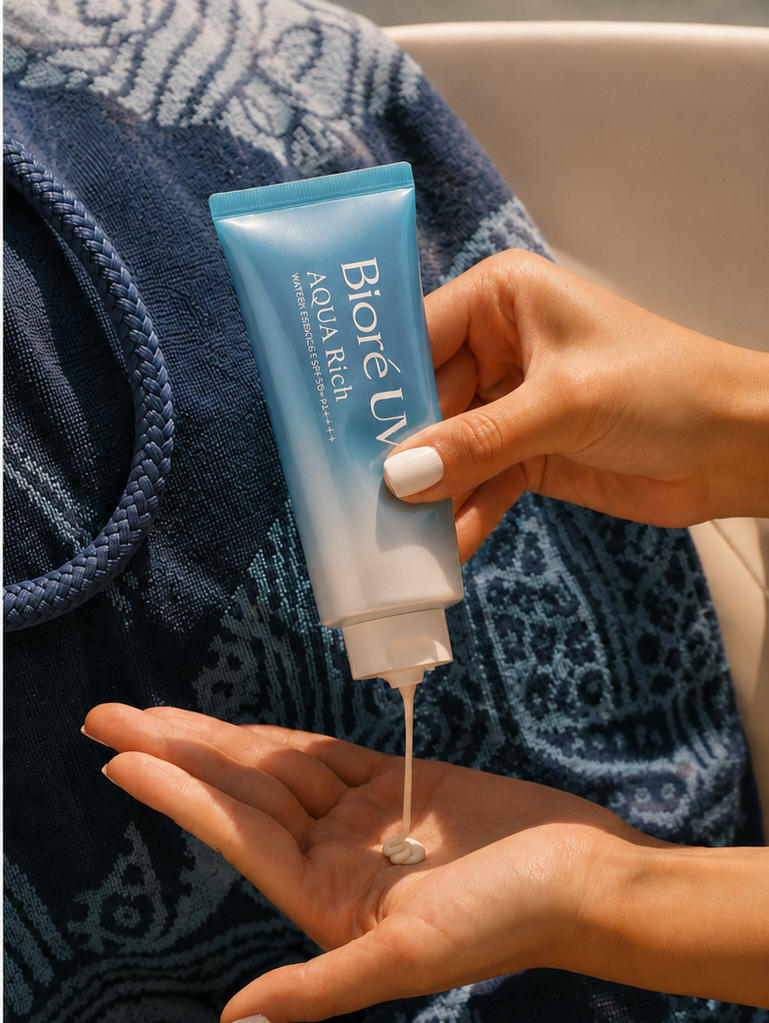
This measures protection against UVB rays — the ones responsible for sunburn. SPF 50 blocks about 98% of UVB rays. Most Japanese sunscreens are SPF 50 or SPF 50+, the highest rating available.
PA (Protection Grade of UVA)
This is where Japanese sunscreen stands apart. The PA system, developed in Japan, measures protection against UVA rays — the deeper-penetrating rays that cause premature aging, hyperpigmentation, and long-term skin damage.
The scale runs from PA+ to PA++++:
- PA+ — Some UVA protection
- PA++ — Moderate UVA protection
- PA+++ — High UVA protection
- PA++++ — Extremely high UVA protection
Most premium Japanese sunscreens carry PA++++, the highest rating. Western sunscreens often don't display a PA rating at all, making it harder to know how well they protect against aging and dark spots.
Japanese Sunscreen Formulas: What Makes Them Different
1. Lightweight Textures
Japanese sunscreens are formulated to disappear into skin. You'll find gel textures, milky fluids, and even mousse formulas — all designed to layer seamlessly under makeup or moisturiser.
2. UV Stick Sunscreens
One of Japan's most practical innovations is the UV stick sunscreen — a solid, portable format that lets you reapply throughout the day without disturbing your makeup. It's ideal for touch-ups on the go and has become a staple in Japanese beauty routines.
3. Hybrid Skincare-Sunscreen Formulas
Many Japanese sunscreens include active skincare ingredients like hyaluronic acid, niacinamide, or ceramides. Rather than being a separate step that sits on top of your routine, they're designed to work with your skin.
4. No White Cast
Japanese cosmetic chemists have refined UV filters to the point where most formulas leave zero white cast — even on deeper skin tones. This is partly due to the use of newer-generation UV filters that aren't yet approved in some Western markets.
Japanese UV Filters vs. Western UV Filters
This is one of the most important differences. Japan (along with the EU and much of Asia) has approved a wider range of UV filter molecules than the United States. Filters like Tinosorb S, Tinosorb M, and Uvinul A Plus offer superior broad-spectrum protection and photostability — meaning they don't break down in sunlight as quickly.
The result: Japanese sunscreens often provide more stable, longer-lasting protection with a lighter feel.
How to Choose the Right Japanese Sunscreen for Your Skin Type
Oily or combination skin: Look for gel or water-based formulas. UV stick sunscreens are excellent for midday reapplication without adding shine.
Dry skin: Choose a milky or lotion formula with added humectants like hyaluronic acid. Pairing your sunscreen with a hydrating toner like Hada Labo Shirojyun Lotion before application creates a plump, protected base.
Sensitive skin: Opt for mineral-leaning or fragrance-free formulas. Japanese brands have a strong tradition of gentle formulations designed for reactive skin.
All skin types: Apply sunscreen as the last step of your morning routine, after moisturiser and before makeup. Reapply every two hours when outdoors.
Building a Japanese Sun Protection Routine
A simple, effective Japanese-inspired morning routine looks like this:
- Cleanse — A gentle face wash like a jelly mousse cleanser removes overnight buildup without stripping the skin barrier.
- Tone & Hydrate — Apply a hydrating lotion (the Japanese term for a watery toner) to prep skin and boost moisture levels.
- Moisturise — If needed, layer a lightweight moisturiser or serum.
- Protect — Finish with SPF 50+ PA++++ sunscreen. Every morning. No exceptions.
Why Authentic Japanese Sunscreen Is Worth Seeking Out
Not all products labelled "Japanese-inspired" are the real thing. Authentic Japanese sunscreens are formulated and tested to Japanese cosmetic standards, use UV filters approved by Japan's Ministry of Health, Labour and Welfare, and are manufactured under strict quality controls.
When you buy directly from a trusted Japanese retailer, you're getting the same product sold in Japanese pharmacies and department stores — not a reformulated export version.
Shop Japanese Sunscreen at JapanStandards
At JapanStandards, we source authentic Japanese beauty and health products directly, so you get the real formulas Japanese consumers trust. Our sunscreen range includes UV stick formats, lightweight daily SPF fluids, and hybrid skincare-sunscreen options — all SPF 50+ PA++++.
Browse our Japanese Sunscreen collection →
Looking for more Japanese skincare guidance? Read our next post: SPF 50+ PA++++ Explained: How to Read Japanese Sunscreen Labels →