




















Understanding Salt in Potato Chips: From Savory Snacks to Japanese Chocolate Chips
Salt is one of the ingredients most closely associated with potato chips. It sharpens potato flavor, adds savory character, and helps create the familiar taste people expect from a crispy snack. But shoppers searching for low sodium potato chips need to look beyond descriptions such as “lightly salted,” “sea salt,” or “mild flavor.”
The nutrition label matters more than the flavor name.
That becomes especially important with Japanese specialty snacks such as ROYCE’ chocolate-covered potato chips. These products combine salted potato chips with chocolate, creating a completely different experience from plain or reduced-salt chips. At Japan Standards, two useful examples are ROYCE’ Potatochip Chocolate Original and ROYCE’ Ishigakijima Potatochip Chocolate Ishigaki Salt.
Neither current Japan Standards product listing provides a sodium-per-serving figure, so this guide does not classify either product as low sodium. Instead, we will explain what low-sodium labeling means, how Japanese salt labeling works, and how Original and Ishigaki Salt compare when flavor—not sodium reduction—is your main buying priority.
Browse more Japanese snacks through the Japan Standards Potato Chips Collection or explore specialty food in the Gourmet Collection.
What Are Low Sodium Potato Chips?
The phrase low sodium potato chips has a more specific meaning than simply “chips that do not taste very salty.” Sodium claims depend on measurable nutrition information, not taste alone.
Salt & Japanese Potato Chip Guide
What Are Low Sodium Potato Chips?
The phrase low sodium potato chips has a more specific meaning than simply “chips that do not taste very salty.”
For U.S. food labeling, the FDA defines:
| Labeling Term | Meaning |
|---|---|
| Low sodium | 140 mg of sodium or less per serving |
| Very low sodium | 35 mg or less per serving |
| Sodium-free | Less than 5 mg per serving |
| Reduced sodium | At least 25% less sodium than the regular reference product |
| Light in sodium / lightly salted | At least 50% less sodium than the regular product |
“No salt added” or “unsalted” does not automatically mean sodium-free because a food can still naturally contain sodium.
Low Sodium vs Reduced Sodium
These terms are not interchangeable.
A product labeled reduced sodium may contain less sodium than its standard version without necessarily qualifying as low sodium.
For example, if a regular potato chip contains substantially more sodium, reducing that amount by 25% can satisfy a reduced-sodium comparison even when the final number remains above the low-sodium threshold.
Lightly Salted vs Low Sodium
“Lightly salted” can sound like a general flavor description, but regulated claims can carry specific requirements depending on the market.
That is why shoppers should compare the actual nutrition facts rather than judging sodium content by taste alone.
Mild Taste Does Not Always Mean Low Sodium
A chip can taste mild because other flavors dominate.
Strong Flavor Does Not Always Mean More Sodium
Spices, acidity, chocolate, herbs, or umami-rich ingredients can make a snack taste intense without telling you exactly how much sodium it contains.
Read the Number
When sodium is your priority, the nutrition panel gives you more useful information than front-of-package wording.
Compare Equivalent Serving Sizes
Always compare products using similar serving amounts rather than comparing one serving from one package with an entire bag of another.
How Sodium Is Shown on Japanese Food Labels
Japanese products can look different from foods labeled for the U.S. market.
Japan’s Consumer Affairs Agency explains that nutrition labeling includes energy, protein, fat, carbohydrates, and sodium, with sodium generally displayed as salt equivalent.
Look for “Salt Equivalent”
On Japanese packaging, shoppers concerned about sodium may encounter 食塩相当量, meaning salt equivalent.
This lets shoppers evaluate the amount of salt associated with the sodium in the food.
Why This Matters When Buying Imported Japanese Snacks
If you are comparing Japanese potato chips with a locally labeled product, the two packages may not present sodium in exactly the same format.
Do Not Compare Units Directly Without Checking Them
One label may show sodium in milligrams while another presents salt equivalent in grams.
Check Serving Basis
Japanese nutrition information may also be given per package, per piece, or per stated quantity.
Imported Products Can Have Additional Labels
Depending on the destination market, an importer may add a local nutrition panel.
Use the Package You Receive
For the most accurate sodium information, refer to the current label on the product itself.
What Gives Potato Chips Their Salty Flavor?
Traditional potato chips usually combine potatoes, oil, and salt.
Salt strengthens the savory impression and complements the natural potato flavor, but modern potato snacks can use it alongside many other seasonings.
Japanese potato chip flavors can include seaweed, soy sauce, butter, curry, wasabi, seafood, miso, and other seasonings.
Chocolate-covered potato chips take the category somewhere else entirely.
Instead of salt working only with savory seasonings, it interacts with sweetness.
Why Salt Works With Chocolate Potato Chips
Chocolate and salt create contrast.
A salted potato chip provides a savory, crispy base. Chocolate adds sweetness, cocoa character, and a smooth texture.
The snack therefore changes while you eat it.
First Comes the Crunch
The potato chip breaks immediately.
Then Comes Chocolate
The coating begins to soften.
Salt Reappears as You Chew
The savory potato base prevents the snack from tasting exactly like ordinary confectionery.
Chocolate Softens the Savory Edge
Sweetness changes how the salty chip is perceived.
Texture Adds Another Layer
Crisp potato and smooth chocolate create a contrast beyond flavor alone.
THE RESULT
Chocolate potato chips sit somewhere between salty snack food and Japanese confectionery.
For more about this relationship, read the Japan Standards Sweet and Savory Potato Chips Guide.
ROYCE’ Original vs Ishigaki Salt
These two products are useful examples of how salt can play different roles in Japanese chocolate potato chips.
| Product | Salt Component | Main Flavor Direction | Low-Sodium Status |
|---|---|---|---|
| ROYCE’ Potatochip Chocolate Original | Salt in potato-chip base | Classic chocolate + salty crunch | Not established by current online listing |
| ROYCE’ Ishigakijima Potatochip Chocolate Ishigaki Salt | Ishigaki salt | More salt-focused sweet-savory contrast | Not established by current online listing |

ROYCE’ Potatochip Chocolate Original 190g
ROYCE’ Potatochip Chocolate Original 190g is the more straightforward interpretation of chocolate-coated potato chips.
Japan Standards currently describes it as crisp potato chips coated on one side with smooth chocolate. The combination balances sweet chocolate with the salty crunch of thin potato chips.
The current Japan Standards listing does not provide a sodium-per-serving value, so it should not be marketed as a low-sodium product based on the online information currently available.
What Is in ROYCE’ Original?
The current ingredient list includes Japanese-made potato chips made from potatoes, vegetable oil, and salt, plus sugar, cocoa butter, cocoa mass, whole milk powder, and an emulsifier. Milk and soy are listed as allergens.
What Does It Taste Like?
Original focuses on a familiar sweet-and-salty balance.
The chocolate is smooth and sweet, while the potato chip underneath brings crunch and a savory finish.
Who Should Consider Original?
It suits shoppers looking for:
- A classic Japanese chocolate potato chip
- Sweet-and-savory snacks
- Chocolate with noticeable potato crunch
- A Japanese snack gift
- A shareable premium treat
Is ROYCE’ Original a Low Sodium Potato Chip?
The current Japan Standards listing does not provide a sodium-per-serving value, so it should not be marketed as a low-sodium product based on the online information currently available.
BUYING CUE
Choose Original for classic chocolate-and-potato flavor rather than specifically as a sodium-reduction option.
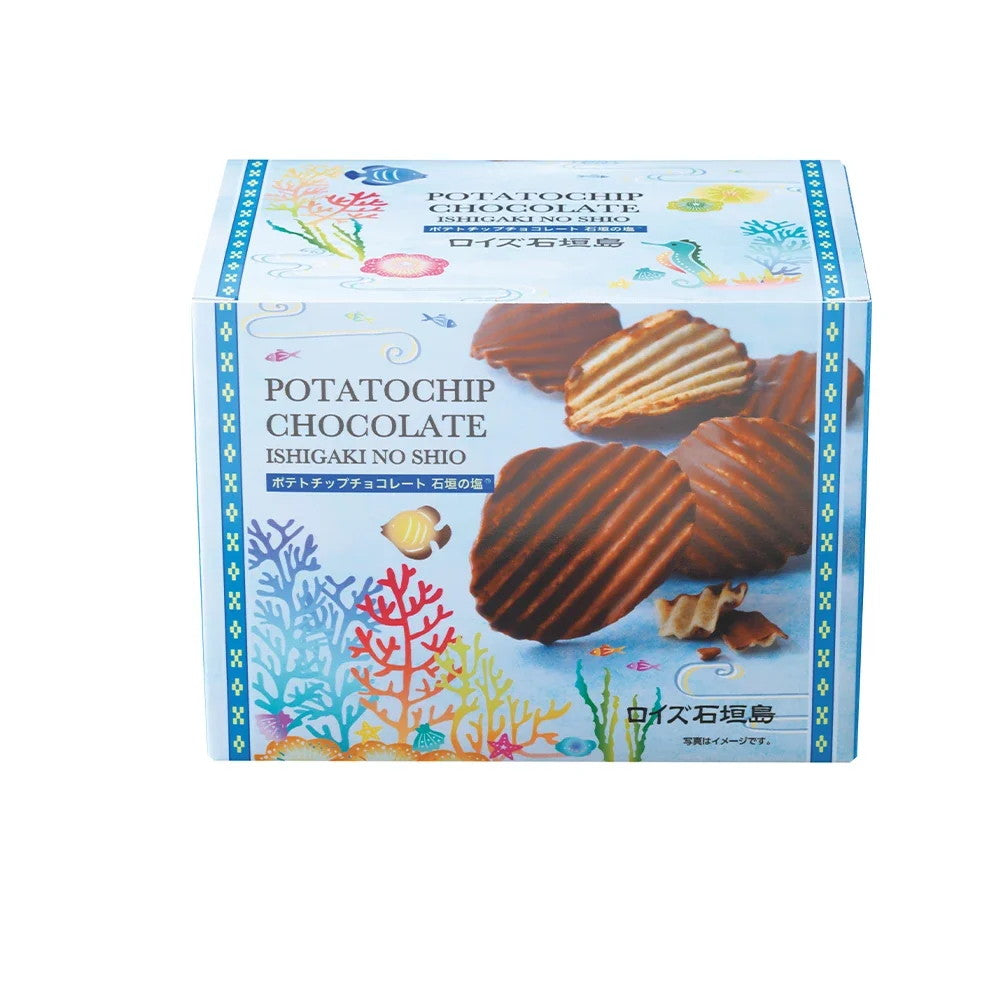
ROYCE’ Ishigakijima Potatochip Chocolate Ishigaki Salt 190g
ROYCE’ Ishigakijima Potatochip Chocolate Ishigaki Salt 190g makes salt a much more visible part of the product identity.
Japan Standards currently describes crisp potato chips seasoned with Ishigaki salt, made from Ishigaki Island seawater, paired with smooth chocolate. The mellow savory salt contrasts with gentle chocolate sweetness.
The type or source of salt alone does not establish that a food is low sodium. You still need nutrition information to determine sodium content.
What Is Ishigaki Salt?
In this product, Ishigaki salt is used directly in the Japanese-made potato chips.
The current ingredient list includes potatoes, vegetable oil, Ishigaki salt, sugar, cocoa butter, cocoa mass, whole milk powder, and emulsifier. Milk and soy are listed as allergens.
What Does It Taste Like?
The flavor places greater emphasis on the contrast between salt and chocolate.
Who Should Consider Ishigaki Salt?
It is a strong fit for:
- Salted-chocolate fans
- Japanese regional snack enthusiasts
- Sweet-and-salty snack lovers
- Gourmet snack boxes
- Food gifts with a regional Japanese ingredient story
Does Sea Salt Mean Lower Sodium?
No. The type or source of salt alone does not establish that a food is low sodium.
You still need the nutrition information to determine sodium content.
BUYING CUE
Choose Ishigaki Salt if you want the salt itself to play a larger role in the tasting experience.
How to Shop for Low Sodium Potato Chips
If sodium reduction is your main goal, use a label-first approach.
Check Sodium Per Serving
For U.S.-style labeling, look for 140 mg or less per serving when a product is described as low sodium.
Check Salt Equivalent on Japanese Packaging
For Japanese products, look for the salt-equivalent figure on the nutrition label.
Compare Serving Sizes
A small serving can make a number appear lower than an entire package.
Do Not Assume “Sea Salt” Means Low Sodium
Sea salt, Ishigaki salt, and conventional salt may provide different flavor stories, but the sodium amount still needs to be checked directly.
Do Not Assume Baked Means Low Sodium
Cooking method and sodium content are separate considerations. A baked chip can still contain significant seasoning, while a fried chip could potentially contain less salt depending on formulation.
Low Sodium vs Flavor-Focused Potato Chips
Not every shopper has the same priority.
Choose products based on verified nutrition information.
Look for low sodium, reduced sodium, lightly salted, unsalted, or no-salt-added options only when the label supports those claims.
Chocolate-covered Japanese potato chips offer a different buying experience.
Original highlights chocolate, potato, and salt.
Ishigaki Salt emphasizes the salt-and-chocolate relationship more strongly.
Do not assume a premium or Japanese product automatically has more or less sodium.
Check the label first, then compare flavor.
How to Serve Japanese Chocolate Potato Chips
These ROYCE’ products are ready to eat.
With Coffee
Original works well with unsweetened coffee, which complements cocoa without adding more sweetness.
With Green Tea
Japanese green tea can give both varieties a clean contrast.
In a Japanese Snack Tasting
Serve traditional savory potato chips first, followed by Original and then Ishigaki Salt.
This helps tasters notice how chocolate changes the salt-and-potato relationship.
For additional varieties, browse the Japan Standards Potato Chips Collection.
How to Store Chocolate Potato Chips
Both current Japan Standards listings recommend storing these snacks below 25°C, away from direct sunlight, heat, and humidity.
Keep Chocolate Away From Heat
Heat can soften the coating.
Keep Potato Chips Away From Humidity
Humidity can reduce crispness.
Reseal After Opening
Store any remaining product according to the package instructions.
Check Current Allergen Information
Both products currently list milk and soy.
PACKAGING CAN CHANGE
Use the package you receive as the final reference for ingredients, allergens, nutrition, and storage.
Where to Buy Japanese Potato Chips
Japan Standards carries both products featured in this guide.
ROYCE’ Potatochip Chocolate Original
Choose it for the classic sweet-and-salty flavor.
Shop Original →ROYCE’ Ishigaki Salt
Choose it when you want a more salt-focused chocolate experience.
Shop Ishigaki Salt →Japan Standards Gourmet Collection
Explore more specialty Japanese food and snacks.
Browse Gourmet →Explore more Japanese foods in the Japan Standards Gourmet Collection, browse the Potato Chips Collection, or visit Japan Standards for more Japanese products.
For more detail on this snack style, see the Chocolate Covered Potato Chips: Japanese Snack Guide.
Frequently Asked Questions
What Are Low Sodium Potato Chips?
Under U.S. FDA labeling rules, a food labeled low sodium generally contains no more than 140 mg of sodium per serving.
Are Lightly Salted Potato Chips the Same as Low Sodium Chips?
Not necessarily. “Low sodium” and “lightly salted” are different labeling concepts, so shoppers should compare the actual sodium figure.
Are Unsalted Chips Sodium-Free?
Not automatically. The FDA notes that unsalted or no-salt-added foods can still contain sodium naturally unless they separately qualify as sodium-free.
How Is Sodium Listed on Japanese Foods?
Japan generally displays sodium as salt equivalent in mandatory nutrition labeling.
Is ROYCE’ Potatochip Chocolate Original Low Sodium?
The current Japan Standards product page does not publish enough sodium information to establish that it qualifies as low sodium, so it should not be described that way.
Is ROYCE’ Ishigaki Salt Low Sodium?
The current Japan Standards listing also does not provide enough sodium information to classify it as low sodium. The product specifically contains Ishigaki salt as part of the potato-chip ingredients.
Final Thoughts
Searching for low sodium potato chips requires more than choosing a snack that sounds lightly seasoned.
The most reliable approach is to read the nutrition information, compare equivalent serving sizes, and understand the difference between terms such as low sodium, reduced sodium, lightly salted, unsalted, and no salt added. In Japan, remember that sodium is commonly presented as salt equivalent.
ROYCE’ Original and Ishigaki Salt serve a different purpose in this guide. They demonstrate how salt can shape premium Japanese chocolate potato chips.
Original balances conventional salty potato crunch with smooth chocolate. Ishigaki Salt places more emphasis on regional Ishigaki salt and its contrast with chocolate sweetness.
If reducing sodium is your priority, verify the current package nutrition before choosing. If you are shopping primarily for a distinctive Japanese sweet-and-savory experience, compare Original and Ishigaki Salt according to the flavor profile you prefer.
Browse the Japan Standards Potato Chips Collection or visit Japan Standards to explore more Japanese snacks and specialty products.
Explore Japanese Potato Chips
Compare ROYCE’ Original and Ishigaki Salt, then explore more Japanese potato chips and specialty snacks at Japan Standards.
Explore Potato Chips